Commercial Waste Herne Hill: Recycling & Sustainability for Local Businesses
Commercial Waste Herne Hill is increasingly about building an eco-friendly waste disposal area where shops, cafes and offices treat waste as a resource. This page explains how a practical, sustainable rubbish area in Herne Hill can be achieved through clear separation, strategic partnerships, and low-carbon transport. We describe targets, local transfer station options, charity reuse links and the fleet choices that help reduce the carbon footprint of your commercial rubbish collections.Our approach to Herne Hill commercial waste sets a measurable ambition: a recycling percentage target of 65% of all commercial waste diverted from landfill by 2028, rising incrementally through improved segregation and reuse. The target reflects realistic progress for an urban eco-friendly waste disposal area, combining cardboard, paper, glass, metal, plastics, organics and specialist streams such as electronics. Local borough strategies support separate collections for dry recycling and organics, and we integrate those borough-led separation rules into commercial rubbish Herne Hill operations to maximise capture rates.
 To turn goals into action we coordinate with nearby transfer stations and materials recovery facilities in Lambeth and neighbouring Southwark boroughs. These local transfer stations act as hubs for consolidating commercial loads, sorting heavier streams and sending recyclables to MRFs and anaerobic digestion plants. Benefits include reduced vehicle-miles, reduced handling costs and faster turnaround for businesses. Key operational elements include:
- Dedicated commercial bays for segregated collections (paper/card, glass, cans, mixed plastics).
- Timed drop-offs to avoid street congestion and speed unloading at transfer stations.
- Chain of custody documentation so businesses can track diversion rates.
Creating a Sustainable Rubbish Area On-Site
A practical sustainable rubbish area begins inside your premises. Use clear labelling, colour-coded bins and consistent staff training to prevent contamination. For many Herne Hill businesses the difference between waste and resource comes down to simple steps: flatten cardboard at source, rinse food-contaminated packaging, keep glass segregated and separate food waste into sealed caddies. These measures support a commercial waste services Herne Hill model that maximises recycling efficiency while reducing collection frequency and costs.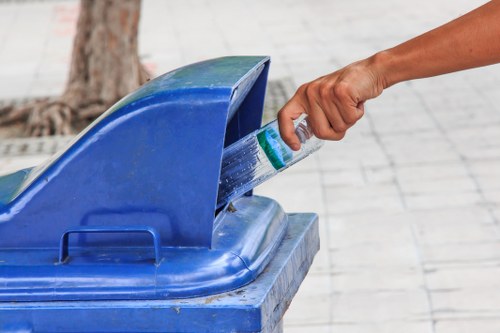 Partnerships with local charities and social enterprises give commercial rubbish in Herne Hill a second life. Rather than consigning usable furniture, textiles and electronics to disposal, businesses can arrange diversion routes to charities and community reuse centres. Working together creates social benefit while reducing waste tonnage. Typical partnership activities include:
- Donating surplus furniture and office equipment to reuse charities.
- Working with food redistribution groups to minimise commercial food waste.
- Establishing collection points for small electricals and batteries for specialist recycling.
Low-Carbon Fleet & Operational Efficiency
A low-carbon van fleet is central to cutting emissions from Herne Hill commercial rubbish collections. Using electric and hybrid vans, combined with route optimisation software and consolidated drop-offs at transfer stations, can cut collection emissions by a significant margin. Many operators aim to convert a large portion of their fleet to low-emission vehicles within five years; through incentives and fleet-sharing schemes, regular commercial waste services Herne Hill can operate with a markedly lower carbon footprint. Driver training on eco-driving and careful scheduling also reduce idling and unnecessary journeys.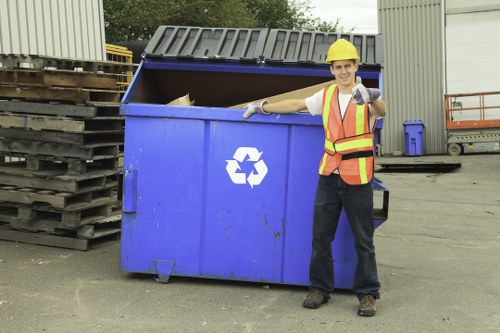 Logistics for businesses vary—some require multiple small daily pickups while others operate weekly bulk collections. By using low-emission vehicles and coordinating with local transfer stations, operators reduce the number of heavy-duty movements through residential streets. The result is quieter streets, cleaner air and a more sustainable rubbish area that aligns with borough air quality objectives and local community expectations.
 Measurement and continuous improvement are vital. Standard KPIs include recycling percentage, contamination rate, number of reuse partnerships and transport emissions per tonne. To stay on track with the 65% recycling percentage target we recommend quarterly reviews and public reporting of diversion rates. This transparency helps landlords and businesses see progress, encourages adjustments where contamination is high, and highlights successful reuse stories.
Practical next steps for businesses seeking a greener Commercial Waste Herne Hill program focus on three actions: (1) implement clear on-site separation for dry recyclables and organics, (2) partner with local charities and reuse schemes, and (3) choose collection partners with low-carbon vans and transfer station relationships. Adopting these measures creates a resilient, cost-effective and community-minded approach to commercial rubbish in Herne Hill.
Local boroughs encourage separation of glass, paper, plastics and food waste, and coordinating commercial collections with those schemes amplifies results. Herne Hill commercial waste solutions that respect borough separation rules and prioritise reuse make the eco-friendly waste disposal area not just an aspiration but a practical reality for businesses of every size.
In short, the path to a sustainable rubbish area in Herne Hill combines measurable targets, smart logistics via transfer stations, charity partnerships for reuse, and a transition to low-carbon vans. Together these elements help businesses meet environmental commitments, reduce operating costs and support the local community—making Commercial Waste Herne Hill synonymous with responsible, circular economy practice.
