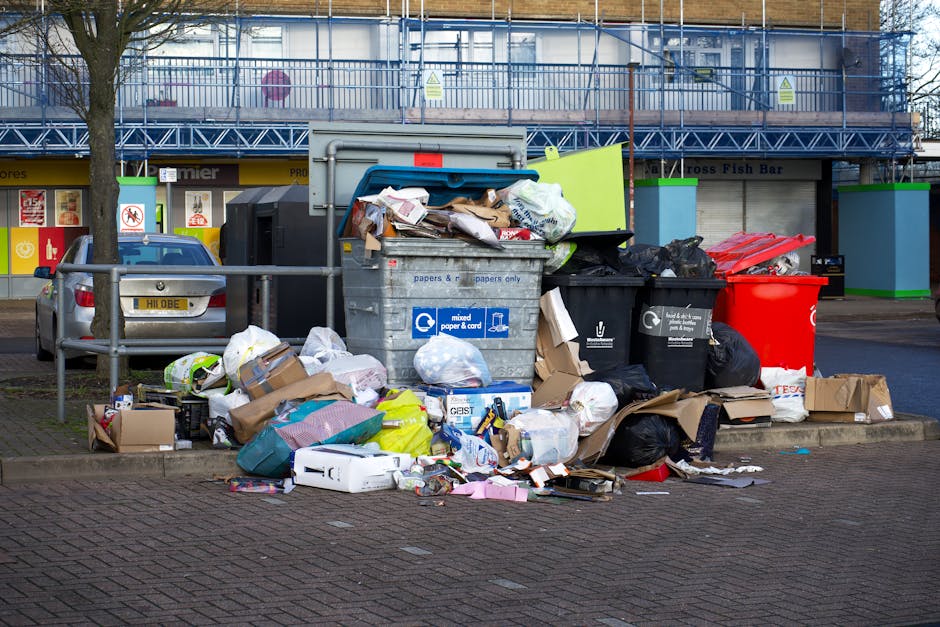
Dulwich Road bulky rubbish removal options for Herne Hill homes: a practical local guide
If you live near Dulwich Road and you've reached the point where a sofa won't fit through the hallway, a broken wardrobe is leaning in the spare room, or the garage has quietly become a storage unit for "things to deal with later", you are in the right place. Dulwich Road bulky rubbish removal options for Herne Hill homes are not just about getting rid of a single awkward item; they are about choosing a method that fits your space, your timing, and the reality of living in a busy London neighbourhood. Truth be told, the best option is often the one that saves you the most hassle, not just the one that looks cheapest at first glance.
In this guide, we'll walk through the main ways to clear large household waste, what to watch out for, and how to make a sensible decision without overthinking it. You'll also see where related services such as furniture disposal, house clearance, and loft clearance fit into the picture when the job is bigger than a quick tidy-up.
Quick expert summary: For most Herne Hill homes, the best bulky rubbish removal choice depends on access, item type, urgency, and how much sorting you want to do yourself. If the load is awkward, heavy, or mixed, a professional clearance option is usually the cleanest route.
- Small single items may suit a simple pickup or appliance-specific disposal.
- Mixed bulky waste often needs a full removal service.
- Furniture, mattresses, and white goods usually need different handling.
- If access is tight, labour matters as much as vehicle space.
Table of Contents
- Why bulky rubbish removal matters on Dulwich Road
- How the removal process works
- Key benefits and practical advantages
- Who this is for and when it makes sense
- Step-by-step guidance
- Expert tips for better results
- Common mistakes to avoid
- Tools, resources and recommendations
- Law, compliance, standards and best practice
- Options, methods, and comparison table
- Case study or real-world example
- Practical checklist
- Conclusion
- Frequently asked questions
Why Dulwich Road bulky rubbish removal options for Herne Hill homes Matters
Bulky rubbish is different from everyday waste. It takes up space fast, is awkward to move, and can cause stress simply because it sits there in the way. In Herne Hill homes, that matters even more. Many properties have narrow staircases, shared entrances, basement rooms, lofts, and parking that is, let's be honest, not always generous. A bulky item can feel manageable when you first see it, then suddenly become a two-person, "how are we going to get this out?" situation.
There's also the practical side. Old furniture, broken appliances, worn mattresses, garden waste, and building offcuts can all need different handling. If you get it wrong, you may end up making multiple trips, overfilling a car, or leaving items in a hallway longer than you planned. None of that is ideal in a busy household.
For local homes on and around Dulwich Road, bulky removal also tends to be about timing. Maybe you're moving out, renovating one room, clearing a garage before winter, or finally tackling the loft after years of delay. In each case, the right option helps you clear space without turning the weekend into a slog.
There's a wider reason too: responsible disposal. Good bulky rubbish removal should support reuse where possible, separate recyclable materials, and keep hazardous or specialist items out of ordinary waste streams. That's where a well-run service earns its keep.
How Dulwich Road bulky rubbish removal options for Herne Hill homes Works
At a basic level, bulky rubbish removal is the process of collecting large or heavy household items from your home and taking them away for sorting, reuse, recycling, or disposal. The exact process varies depending on what you have and how much of it there is, but most options follow a similar pattern.
Typical workflow
- You identify the items. This might be a sofa, wardrobe, mattress, fridge, garden waste, or a mixed pile of household clutter.
- You decide what needs to go. A clear list usually makes the job cheaper and simpler.
- You check access. Think stairs, lift access, front steps, tight halls, parked cars, and whether the items can be carried safely.
- You choose the removal method. That could be a specialist bulky pickup, a mixed-load clearance, a skip, or a house clearance service.
- The load is removed and sorted. Reusable items may be separated, while recyclable materials and waste streams are handled accordingly.
- The area is left tidy. A decent service does not just take the item and vanish. The neat finish matters.
If your load includes specific items like an appliance, mattress, or sofa, it helps to use a service designed for that category. For example, fridge and appliance removal is useful when you have a washing machine, fridge, freezer, or similar item that needs careful handling. Likewise, mattress and sofa disposal is the better fit for large upholstered items that are bulky but not necessarily mixed with general waste.
A lot of people start by asking, "Can I just put it all in one go?" Sometimes yes. Sometimes no. The answer depends on item type, weight, access, and whether anything needs special processing. That is where a quick assessment saves time later.
Key Benefits and Practical Advantages
The main reason homeowners choose professional bulky rubbish removal is simple: it reduces friction. You don't need to borrow a van, recruit a mate with a strong back, or spend half a day queuing at a disposal site. But there are a few more benefits that are easy to overlook until you actually need them.
1. Less disruption at home
Bulky items make rooms feel cramped. Remove them, and the space changes immediately. A spare room becomes usable again. A hall stops feeling like an obstacle course. Even a cleared corner can make a home feel calmer. Small win, but a real one.
2. Better handling of awkward items
Some items are not just heavy; they're awkward. A wardrobe can catch on a staircase turn. A sofa can be too big for a front door frame unless it's angled just so. Experienced removal teams are used to that sort of thing. They plan for the lift, the turn, the scrape-by-the-wall moment. You know the one.
3. More responsible disposal
Reusable items and recyclable materials are easier to separate when a service knows what it is dealing with. That can be better for the environment and often better for the overall cleanliness of the process. If sustainability matters to you, it's sensible to look at a provider's recycling and sustainability approach before booking.
4. Time saved
Time is a proper factor here. What looks like a quick tidy-up can stretch into an entire Saturday. A professional collection compresses all the loading, lifting, sorting, and transport into one organised visit. Handy, especially if life is already busy.
5. Reduced risk of damage or injury
Dragging a heavy item through a narrow corridor can damage walls, skirting boards, floors, and your back. Not ideal. A managed removal reduces that risk through planning, lifting technique, and the right equipment.
Who This Is For and When It Makes Sense
Dulwich Road bulky rubbish removal options for Herne Hill homes suit a wide mix of households. Some people need help with one stubborn item. Others are dealing with a full property clear-out. The clue is usually in how much lifting, sorting, and coordination the job demands.
It makes sense if you are:
- clearing out after a move
- refreshing a room and replacing old furniture
- dealing with a broken fridge, sofa, mattress, or wardrobe
- emptying a loft, garage, or garden store
- managing a rental property turnover
- preparing for decorating or renovation work
- sorting a bereavement or probate-related home clearance
For smaller flats and maisonettes, access can be the deciding factor. A single bulky item might be straightforward on paper, but if you have narrow stairs and no lift, it becomes a different job entirely. In those cases, a flat clearance service can be more suitable than a basic collection.
Garden-heavy homes may need a different approach again. If the bulky waste is branches, broken planters, rotting fencing, or old outdoor furniture, then garden clearance may be the cleaner fit.
And if the issue is not one item but several rooms, a broader home clearance or house clearance can save a lot of back-and-forth. That's often the point where people say, "Actually, this is bigger than I thought." Quite normal, honestly.
Step-by-Step Guidance
If you want the smoothest result, treat bulky rubbish removal like a small project. Nothing dramatic. Just a few smart steps. Here's the practical version.
Step 1: Sort what is going
Walk through the space and separate bulky items into rough groups: furniture, appliances, mattresses, general junk, garden waste, and anything potentially hazardous. Don't worry about perfection. Just get a clear picture.
Step 2: Measure or photograph the items
This helps with quoting and avoids surprises on the day. A quick photo of a sofa, fridge, or pile of mixed waste can tell a service far more than a vague description. If there's an awkward doorway or a tight stair turn, include that too.
Step 3: Decide if anything needs specialist handling
Fridges, freezers, certain electrical items, and anything potentially hazardous should not be treated like ordinary waste. If you have paint, chemicals, or other risky materials, check the right route first. For those items, hazardous waste disposal is the safer direction.
Step 4: Choose the right service type
Ask yourself: is this one bulky item, several furniture pieces, or a full clearance? A single pickup is different from a mixed home clearance. For office-style waste, there is also office clearance if the job involves desks, chairs, or workroom items rather than domestic furniture.
Step 5: Check pricing and booking terms
Before you commit, review how quotes are built and what affects the final cost. Access, volume, item type, and labour all matter. It is worth looking at pricing and quotes and, if relevant, payment and security so you know how the process works.
Step 6: Prepare the items for collection
Move loose objects aside, clear a route, and make sure pets and small children are kept away from the lifting path. If the collection is inside a flat or house, open gates and doors where possible. Little practical things, but they help a lot.
Step 7: Confirm the outcome
Once the load is gone, check the space and make sure no stray fixings, packaging, or small parts have been left behind. The room should feel different straight away. Cleaner. Lighter. Quieter, even.
Expert Tips for Better Results
In our experience, the smoothest bulky removals are the ones that are slightly over-prepared rather than rushed. You don't need a military operation. Just a bit of foresight.
- Group items by type. Furniture with furniture, appliances with appliances, garden waste with garden waste. It speeds up loading and sorting.
- Keep access clear. Shoes in the hall, bikes in the doorway, laundry baskets on the stairs - all minor until they are not.
- Be honest about item condition. A broken sofa and a usable sofa are not always processed the same way.
- Ask about heavy lifting. If something needs two people, say so. Don't leave it to chance.
- Plan around neighbours and parking. On Dulwich Road, timing can matter. A tidy, efficient load-out is simply easier for everyone.
- Think beyond removal. If you are replacing furniture, consider whether the old item needs specialist disposal or a separate clearance.
A small micro-tip: take five minutes to remove cushions, drawers, or shelves from large items before collection. It sounds obvious, but people forget, then wonder why the wardrobe feels even heavier. Happens all the time.
If you are clearing a storage-heavy space like a loft or garage, it can help to combine services rather than book item by item. A garage clearance or loft clearance often makes more sense than piecemeal removals, especially when the items are mixed and dusty and a bit unpredictable.
Common Mistakes to Avoid
Bulky rubbish removal looks simple until the details start biting. These are the mistakes people most often make.
1. Assuming everything counts as "general waste"
A mattress, fridge, paint tins, and an old sofa are not all handled the same way. If you treat them as identical, you can end up with delays or the wrong service type.
2. Forgetting about access
A large item may fit through the door but fail on the staircase bend. If your property has tight corners, a shared entrance, or a basement level, mention it early. It saves everybody a headache.
3. Leaving the sort-out until collection day
That usually turns into panic sorting. Better to choose what goes, group it, and keep the rest well away. You'll thank yourself later.
4. Underestimating the size of the job
One spare-room clear-out can become half a house. It's not a moral failing; it just happens. But if the job is bigger than expected, ask whether a broader clearance service is more appropriate.
5. Ignoring specialist item rules
Some items need extra care. For example, large soft furnishings and mattresses can be awkward to move and dispose of correctly. If that's the main challenge, using a specialist route like mattress and sofa disposal is usually the sensible choice.
Tools, Resources and Recommendations
You do not need much to prepare for bulky rubbish removal, but a few simple tools make life easier. A tape measure, phone camera, gloves, and a basic checklist are usually enough. Nothing fancy. Sometimes the humble marker pen does more work than an expensive gadget, to be fair.
Useful things to have ready
- a tape measure for doors, stair widths, and large items
- phone photos from several angles
- basic gloves if you are moving loose items
- labels or notes for items you want to keep
- clear access to the front door or collection point
If you are comparing removal methods, it also helps to understand what can and cannot go into a skip. The page on what can go in a skip is a useful reference when you are deciding between a skip and a man-and-van-style clearance. Skips can be a good option for some projects, but they are not always the neatest choice for mixed bulky household items.
If you want to know more about the company behind these services, the about us page is worth a look. And if you prefer to make arrangements online, you can use book online to get the process moving without a long back-and-forth.
Law, Compliance, Standards and Best Practice
With bulky rubbish, compliance is mostly about doing things properly and avoiding shortcuts. In the UK, households still need to make sure waste is passed to a legitimate carrier and not dumped informally. That sounds obvious, but it matters. If someone offers a suspiciously cheap collection from the back of a van and cannot explain where the waste goes, that is a red flag. Simple as that.
Best practice also means separating hazardous materials, electrical items, and anything requiring special handling. Even when the load is domestic, the person collecting it should know how to handle it safely and what to do with it afterwards. A reputable service should also have clear safety procedures and proper insurance arrangements. If you want to understand that side better, health and safety policy and insurance and safety are useful pages to review.
For residents in shared buildings or flats, courtesy matters as well as compliance. Keep communal areas clear, avoid blocking access, and let neighbours know if a large item is being carried out. That little bit of planning goes a long way. It's the kind of thing people remember.
There is also the environmental side. Responsible handlers will aim to recycle or divert materials where practical, and they will generally treat reuse as part of the process rather than an afterthought. That is why choosing a provider with a sensible sustainability approach is more than a nice extra.
Options, Methods, or Comparison Table
There is no single best method for every home. Here's a practical comparison to help you choose the right route.
| Option | Best for | Pros | Watch out for |
|---|---|---|---|
| Single-item pickup | One sofa, mattress, fridge, or wardrobe | Quick, targeted, minimal fuss | Not ideal for mixed loads or very awkward access |
| Furniture-specific disposal | Bulky furniture only | Handles larger pieces cleanly | May not suit appliances or mixed household waste |
| Full house clearance | Several rooms or an entire property | Efficient for big jobs, saves time | More planning needed, especially for valuables |
| Flat clearance | Upper-floor homes and compact spaces | Helpful for stairs, access, and building constraints | Access details matter a lot |
| Skip hire | DIY projects with space for a container | Good for ongoing loading over time | Can be awkward in tight streets and not ideal for lifting-heavy jobs |
In a Herne Hill setting, the winner is often the option that reduces lifting and simplifies access. A skip can work well for some renovation waste, but if you have a sofa, wardrobe, and old appliances all together, a removal service often feels less messy and more direct.
Case Study or Real-World Example
Here's a realistic example from a typical local situation. A homeowner near Dulwich Road had a spare room full of old furniture: a bed base, mattress, broken chest of drawers, a single armchair, and a few bags of mixed clutter from the loft. Nothing extreme, but awkward enough that it had become one of those jobs everyone kept sidestepping.
At first, they thought about hiring a van and doing it themselves. Then they looked at the staircase. Narrow turn, low ceiling on one section, and a front hall just wide enough for one item at a time. That was the moment the plan changed. A clearance approach made more sense than multiple DIY trips.
The items were grouped by type, photographed, and checked for anything specialist. The mattress and chair needed separate handling from the general clutter. The route out of the house was cleared beforehand, and the collection was completed in one visit. The best bit? The room looked usable again by the afternoon. Not glamorous, but genuinely satisfying. You could hear your own footsteps in there afterwards, which says a lot.
That sort of outcome is common. People often think they need a huge project plan. Usually, they just need the right method and a bit of practical organisation.
Practical Checklist
Use this quick checklist before booking any Dulwich Road bulky rubbish removal options for Herne Hill homes.
- List every item you want removed.
- Separate furniture, appliances, garden waste, and general rubbish.
- Check whether any item needs special handling.
- Measure access points, stairs, and doorways if the item is large.
- Take photos for an accurate quote.
- Clear a path from the item to the exit.
- Remove loose parts, shelves, cushions, or drawers where sensible.
- Confirm booking time, access arrangements, and payment details.
- Keep valuables and items to be retained out of the clearance area.
- Review whether a single-item pickup, flat clearance, or full house clearance is the best fit.
If your project includes old furniture or mixed household clutter, you may also want to review furniture clearance options before committing to a more general service. That little bit of matching up can save money and avoid overbooking the wrong type of removal.
Conclusion
Choosing among Dulwich Road bulky rubbish removal options for Herne Hill homes is mostly about matching the method to the mess. A single sofa is not the same as a loft full of mixed items. A fridge is not the same as a pile of renovation offcuts. And a flat with tight stairs needs a different plan from a house with easy access.
When you take the time to sort items, check access, and choose the right service type, the whole process becomes simpler and far less stressful. That's the real win here. More space, less clutter, and no unnecessary weekend chaos.
If you're ready to clear space without the usual faff, the sensible next step is to compare the right removal route for your items and get the job lined up properly.
Get a free quote today and see how much you can save.
Frequently Asked Questions
What counts as bulky rubbish in a Herne Hill home?
Bulky rubbish usually means large or heavy items that do not fit into normal household bins, such as sofas, wardrobes, mattresses, appliances, or mixed household clutter. If it needs two hands and a plan, it probably counts.
Is it better to use a skip or a removal service?
It depends on the job. A skip can suit ongoing DIY waste, but a removal service is often better for heavy furniture, upstairs items, or mixed loads. If lifting is the main challenge, removal is usually simpler.
Can I book bulky rubbish removal for just one item?
Yes, many people do. One awkward sofa or fridge can be enough reason to book. It often makes more sense than hiring a van and risking damage or injury.
What should I do before the collection team arrives?
Clear the route, group the items, and remove anything you want to keep. If possible, take a few photos and make sure doors, gates, or communal access points are open.
Do mattresses and sofas need special disposal?
Often, yes. They are bulky, awkward to handle, and may need a specific disposal route. Using a service that handles mattress and sofa disposal is usually the cleanest option.
What if my rubbish includes a fridge or freezer?
Fridges and freezers should be handled carefully because they are appliance items with specific disposal requirements. A dedicated appliance removal service is the safer approach.
How do I know if I need a full house clearance?
If more than one room is involved, or if the load includes lots of mixed items, a full house clearance may be more efficient than booking smaller collections one by one.
Can bulky rubbish removal help with loft or garage clear-outs?
Yes. In fact, lofts and garages are classic bulky waste hotspots. For those spaces, garage clearance and loft clearance can be the most practical options.
What happens to the items after collection?
That depends on the item and the service, but responsible providers sort for reuse, recycling, and appropriate disposal where possible. It is always sensible to ask how waste is handled.
Is bulky rubbish removal suitable for flats and maisonettes?
Absolutely, but access becomes a bigger factor. Stairs, lifts, shared entrances, and parking can affect the best method. A flat clearance approach is often the right fit.
How far in advance should I book?
If your items are not urgent, giving a little notice helps. If you're clearing for a move or renovation, book early enough to avoid last-minute stress. Even one extra day can make the process feel calmer.
Can I include mixed household items in one collection?
Usually, yes, provided the items are acceptable and not hazardous. Mixed loads are common, but they need a bit more sorting so the right materials go to the right place. That's where an organised removal really earns its keep.
What is the best option for a cluttered home with several types of bulky waste?
A broader home clearance or house clearance is often best. It gives you one coordinated visit rather than trying to split the job into pieces.
How do I choose a trustworthy provider?
Look for clear pricing, sensible safety information, straightforward booking, and a responsible approach to disposal. The service should feel organised, not rushed or vague. If it feels sketchy, trust your instinct and keep looking.